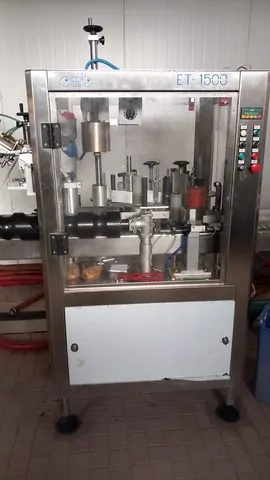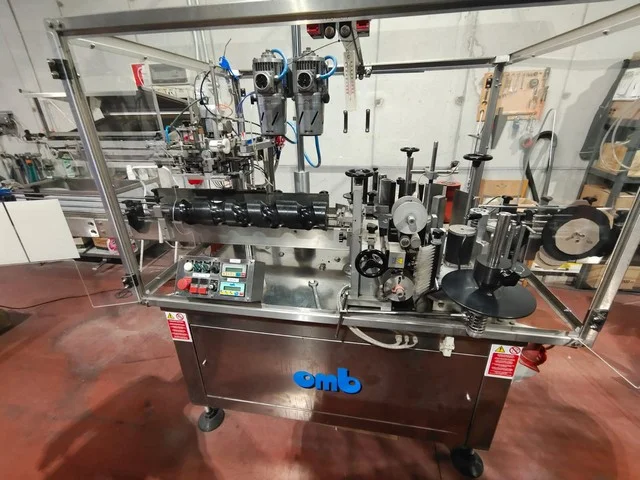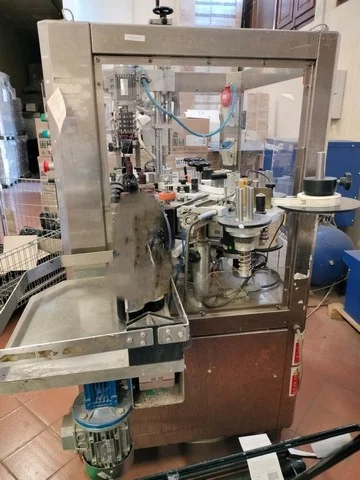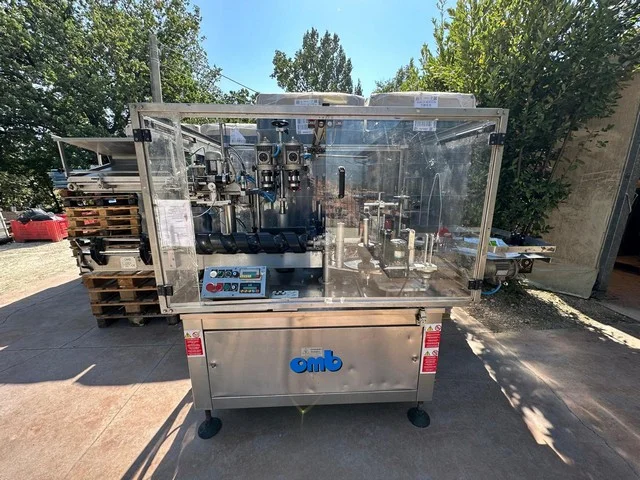
OMB capsulatrice with labeller
Modello ET 2000 2T
- Produttore
- OMB
- Modello
- ET 2000 2T
- Anno
- 1999
- Velocità
- 1800 BPH
- Direzione
- Linear
- Condizione
- As Is
- Ubicazione
- Europe
- Codice
- BC 401
Rispondiamo in tempo reale con preventivo, foto e dettagli tecnici.
Panoramica
Used OMB ET 2000 2T Capsuling Machine of 1999 is a dedicated system for still wine, combining both capsuling and labeling functionalities. This second-hand capsuling machine for sale operates at a speed of 1800 bph and features a linear flow direction from left to right. The capsuling section of this used OMB capsuling machine is equipped with 2 thermal heads for capsule application, complemented by 2 rolling heads designed for smooth capsule finishing. Following the capsuling process, the machine integrates a labeling section featuring 3 adhesive stations built into a fixed group configuration. This OMB ET 2000 2T is set up to apply a comprehensive range of labels, including front labels, back labels, and a unique wrap-around neck label, also noted as a full neck label, ensuring complete product branding. Crucially, as a 1999 model, it includes safety protection features, a critical aspect for older equipment. This specific omb et 2000 2t 1800 bph unit is currently located in Europe and is offered in 'As Is' condition. Its design, with 2 thermal and 2 rolling heads, indicates a robust mechanical system for capsule application, while the 3 adhesive stations provide versatility for required label placements on still wine bottles.
Contesto tecnico
When inspecting this particular 1999 OMB ET 2000 2T, focus on a few critical areas. For the 2 thermal heads, examine the heating elements and their associated temperature control circuits; consistent heat is vital for effective capsule shrinking. Check the insulation around these heads for any degradation. The 2 rolling heads should be inspected for wear on the rollers themselves – look for flats or grooves that indicate uneven pressure or excessive use, leading to poor capsule finish. For the 3 adhesive stations, the condition of the glue pots, application rollers, and glue pumps is paramount. Are there signs of dried glue buildup, indicating poor cleaning practices? Check the condition of the doctor blades and the precise alignment of the labeling heads for front, back, and wrap-around neck labels. The 'fixed group' configuration described means fewer adjustments during operation, but ensuring the mechanical integrity of this fixed assembly is crucial. Pay close attention to the main drive train, especially the gearboxes and bearings, given the machine's age; listen for unusual noises during a dry cycle if possible. For a 1999 unit, verify the stated 'safety protection' is still fully operational and compliant with any local regulations – often, safety upgrades are required on older machines. Inquire about any available spare parts inventory, particularly for wear items like thermal head heating elements, rolling head sleeves, and adhesive station consumables like glue rollers or seals. Also, check the electrical cabinet: look for original components versus any modifications, ensuring all wiring is secure and insulation is intact for a machine of this vintage. Confirm the machine's ability to smoothly transition between the different label applications listed: front, back, and the wrap-around neck label.
Integrazione di linea
Integrating this OMB ET 2000 2T into a capping and labeling line requires careful consideration for its 1800 BPH throughput and linear flow. Given its left-to-right direction, an upstream filler or corker feeding directly into the OMB’s infeed starwheel is ideal. Depending on the filler’s output, a small accumulation table, perhaps a serpentine or bi-directional unit, might be prudent just before the OMB to smooth flow and prevent intermittent stops. For the downstream, a simple single-file conveyor leading to a packing area or case packer would suffice, matched to the 1800 BPH. Due to the linear layout, compact layouts are achievable, but ensure ample access for maintenance around the two thermal heads and three adhesive stations. For format changeovers, the primary concern will be the bottle handling parts – specifically, the infeed and outfeed starwheels, guide rails, and any centering devices for the labeling stations. A buyer should definitely request any existing change parts for different bottle diameters and heights. Throughput balancing is straightforward; this machine reliably handles 1800 BPH, so ensure upstream filling and corking operations can sustain this, and downstream packing can clear it. Avoid bottlenecks by having sufficient buffer capacity on either side, especially for the still wine product which often involves specific filling and corking parameters.
Descrizione
Model: ET 2000 2T
Year: 1999
Speed: 1800 bph
Linear from left to right
Product: still wine
2 thermal heads
2 rolling head
3 adhesive station
Fixed group
Type of label:
-	Front
-	Back
-	Wrap-around neck label / full neck label
Safety protection