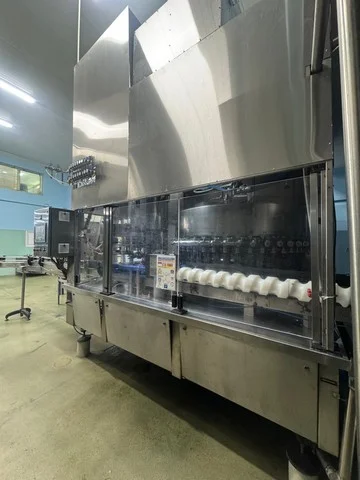
Skoma pet monoblock 42.10
- Produttore
- Skoma
- Anno
- 2000
- Velocità
- 25 BPH
- Direzione
- Counterclockwise
- Contenitore
- PET
- Condizione
- As Is
- Ubicazione
- Europe
- Codice
- QT 756
Rispondiamo in tempo reale con preventivo, foto e dettagli tecnici.
Panoramica
Used Skoma Filling Monoblocks of 2000, specifically a Skoma pet monoblock 42.10, is available for plants seeking reliable, second-hand filling monoblocks for sale. This particular Skoma unit, manufactured in 2000, offers a dedicated capacity of 25,000 bottles per hour (bph) when handling 0.5-liter PET containers, making it a robust option within used Skoma filling monoblocks for volume filling operations. The machine operates with a Counterclockwise rotation, a common direction for many established bottling lines. It integrates a gravity filler section equipped with 42 individual valves, designed for efficient product delivery into PET bottles. Following the filling stage, the monoblock features one capper with 10 capping heads, specifically configured to handle two common cap types: 29/25 flat caps and 29/25 sport caps. Safety is addressed through integrated safety protection features. For businesses looking for a Skoma 25 BPH machine, this monoblock provides a compact and integrated solution for both filling and capping. This Skoma pet monoblock 42.10 is currently located in Europe and is being offered in 'As Is' condition.
Contesto tecnico
When inspecting this Skoma pet monoblock 42.10 from 2000, pay close attention to wear points typical of a machine of this vintage. For the 42-valve gravity filler, meticulously check the condition of each filling valve for seals, plungers, and any signs of product leakage or wear that could impact fill accuracy. Examine the cam tracks for the filling valves for excessive wear or pitting, which can lead to erratic valve operation. On the 10-head capper designed for 29/25 flet cap and 29/25 sport cap, inspect the capping chucks for wear, especially the inserts, which directly contact the caps and dictate torque consistency. Verify the condition of the cap sorter and feeder, ensuring no blockages or damage are present. The 'safety protection' mentioned should be thoroughly inspected; check that all interlocks function as intended and that physical guards are present and undamaged, meeting current safety standards – a 2000 machine might have older compliance. Request any available spare parts, particularly for the filler valves and capper jaws, as these are high-wear items and can be harder to source for older equipment. Confirm the electrical schematics and control system are available and in readable condition, as troubleshooting an older system without documentation can be time-consuming. Observe the main bearing and gearboxes for unusual noise or vibration during a dry cycle, looking for evidence of neglect in lubrication or impending failure. Check for corrosion, especially in areas exposed to product or washdowns. Verify the programming ability for different cap types and, if possible, test the changeover mechanism.
Integrazione di linea
Integrating this Skoma monoblock, with its 25,000 bph capability and Counterclockwise flow, requires careful planning for upstream and downstream equipment. Given its 42-valve gravity filler and 10-head capper, a suitable bottle unscrambler or depalletizer would feed PET containers into the line, matched for throughput. A rinse-fill-cap monoblock like this implies bottles arrive clean, typically from an air rinse or a rinser integrated directly before the filler, if not part of this specific unit’s configuration. Conveyor layout considerations are crucial; a Counterclockwise direction means bottles enter from the left and exit to the right relative to the operator’s main viewpoint, aligning with standard line designs for ergonomics and product flow. Accumulation tables, both before and after the monoblock, are essential to buffer against minor line stoppages, ensuring the 25,000 bph speed isn't bottlenecked by intermittent supply or takeaway issues. A 3–5 minute accumulation buffer is a good starting point. For format changes between 29/25 flat caps and 29/25 sport caps, a buyer should inquire about existing change parts for the 10-head capper, as well as starwheels and guides for the 0.5L PET bottles, and any other bottle sizes they intend to run. Throughput balancing means ensuring the labeler and secondary packaging equipment downstream can comfortably handle the 25,000 bph output, preventing expensive downtime at the primary packaging stage.
Descrizione
Year: 2000
Speed: 25.000 bph on 0.5l
Counterclockwise
Gravity filler with 42 valves
One capper with 10 heads for: 29/25 flet cap-29/25 sport cap
Safety protection