Cimec monoblock 9.8.1
Modello DPS 9/8/1C
- Produttore
- CIMEC
- Modello
- DPS 9/8/1C
- Anno
- 2006
- Velocità
- 1000 BPH
- Direzione
- Clockwise
- Contenitore
- Glass
- Condizione
- As Is
- Ubicazione
- Europe
- Codice
- QT 769
Rispondiamo in tempo reale con preventivo, foto e dettagli tecnici.
Panoramica
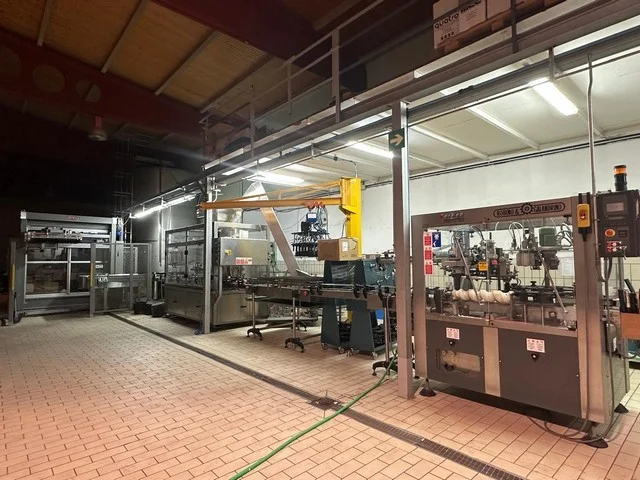
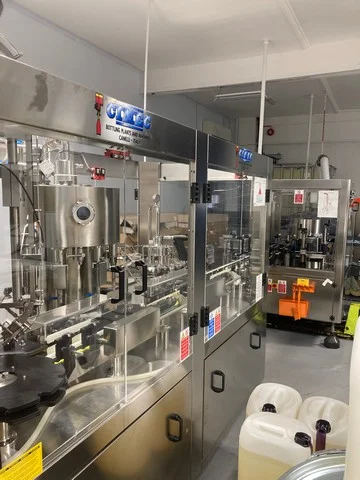
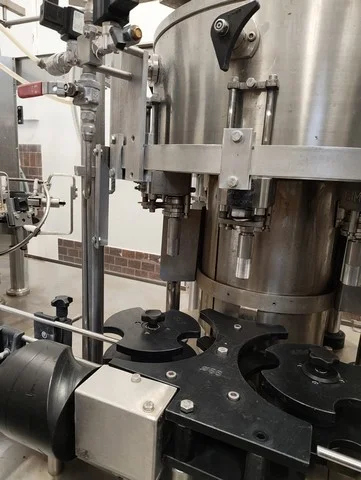
Used CIMEC DPS 9/8/1C Filling Monoblocks of 2006, this specific unit is configured for packaging glass bottles, demonstrating its capability as a robust solution for a beverage line. Operating at a steady rate of 1,000 bottles per hour (bph), it's designed with a clockwise rotation direction, a standard configuration for efficient line integration. This second-hand filling monoblock incorporates a 9-clamp rinser featuring fixed nozzles, dedicated to a single water treatment process to prepare containers effectively. The core of this used CIMEC filling monoblock is its isobaric filler, equipped with 8 mechanical valves, specifically engineered for filling carbonated beverages by performing a double pre-evacuation and degassing function before filling, which is critical for product stability and shelf life. Further downstream, the machine includes a single-head crown capper, built to handle 29 mm crown caps, utilizing a 'pick on the fly' distribution system for precise cap placement. For operator safety and compliance, the unit is fitted with safety protections. This used CIMEC DPS 9/8/1C 1000 BPH is currently located in Europe and is offered in 'As Is' condition, providing a cost-effective option for operations looking to integrate a reliable monoblock system into their production framework. When searching for a used cimec filling monoblocks or second-hand filling monoblocks for sale, this particular 2006 model presents a defined capacity and feature set for glass bottling applications.
Contesto tecnico
When you're inspecting this 2006 CIMEC DPS 9/8/1C, don't just glance at it; get in there. Start with the 9-clamp rinser: those fixed nozzles are crucial. Check for corrosion or mineral buildup inside the nozzles, especially if the local water quality is hard, even with '1 water treatment.' You need to verify that water treatment actually happened and how effectively. Wiggle each rinser clamp; ensure they articulate smoothly without excessive play, indicating worn bushings. Move to the isobaric filler with its 8 mechanical valves and critically, the double pre-evacuation/degassing function. This is a complex mechanical system. Look for any signs of product leakage around the valve stems or cylinder seals during a dry cycle if possible. Inspect the condition of the cam followers and the cam tracks for pitting or uneven wear, as these dictate valve timing and precision. For a 2006 machine, fatigue in these components is a real possibility. The single-head crown capper, rated for 29 mm caps with 'pick on the fly' distribution, requires specific attention. Examine the crown hopper for wear, and more importantly, the cap chute and the 'pick on the fly' mechanism; look for bent or worn cap guides and listen for any grinding during a manual cycle. Check the condition of the actual crimping head – any nicks or uneven wear on the crimping jaws can lead to inconsistent cap application or damaged caps. The 'safety protection' is mentioned, which is great, but verify it's not bypassed. Are all interlocks functional? Are the clear Lexan guards intact and free of cracks from bottle impact? Also, ask for any electrical drawings; for a 2006 machine, understanding the PLC and control panel components, especially proprietary ones, is vital for long-term maintenance. Finally, insist on seeing it run, even dry, to observe the synchronization between the rinser, filler, and capper. Slight misalignments or worn gears (not explicitly mentioned in the description but a reality for older machines) can manifest as jerky movements. Don't sign anything until you've done a thorough tactile and visual inspection, and ask for a complete spares list from the previous owner; you'll want those critical wear parts on hand.
Integrazione di linea
Integrating this CIMEC DPS 9/8/1C monoblock, running at 1,000 bph with clockwise rotation, requires careful consideration of the upstream and downstream equipment. Ahead of the monoblock, you'll need an unscrambler or depalletizer sized for glass bottles, capable of feeding at least 1,000 bph, followed by a conveying system that gently transitions bottles onto the rinser infeed. Standard single-file bottle conveyor, perhaps 3.25 inches wide, would work fine. Given the clockwise rotation, ensure the infeed conveyor approaches from the left, directing bottles into the machine's right-hand side. For throughput balancing, consider a small accumulation table after the unscrambler, maybe 3-5 minutes of buffer, to smooth out minor upstream hiccups before the bottles hit the critical path of the monoblock. Immediately after the single-head crown capper, you'll want another short section of conveyor leading to a labeler – an inline pressure-sensitive labeler or even a rotary might fit, depending on label complexity and budget. For a machine operating strictly at 1,000 bph, consider using a simple gap transfer or a small accumulation buffer (1-2 minutes) before the labeler to prevent back pressure on the capper. Regarding format changeover, while the description doesn't specify, you'll absolutely need a full set of neck guides, starwheels (in-feed, center, discharge), and bottle grippers for each bottle diameter you plan to run. Always request any existing format parts for specific bottle types; it saves a fortune. You'll also want to inquire about change parts related to the 29 mm crown capper if you ever anticipate a different cap size, though that's less common for crown caps. For the discharge, a single-lane conveyor is typical, feeding directly into a packer or case erector. The clockwise rotation means your filled and capped bottles will exit on the right side if viewing the machine from the operator's panel, something to factor into your line layout drawings for downstream equipment placement.
Descrizione
Model: DPS 9/8/1C
Year: 2006
Speed: 1,000 bph
Rotation direction: clockwise
Container type: glass bottles
Rinser: 9 clamps with fixed nozzle
Treatment: 1 water treatment
Filler: isobaric filler with 8 mechanical valves
Valve functions: double pre-evacuation / degassing
Capper: single-head crown capper
Cap size: 29 mm
Distribution: pick on the fly
Safety protection