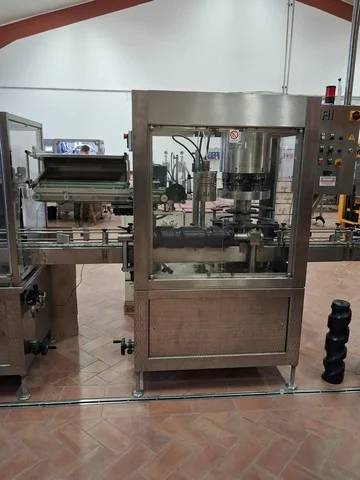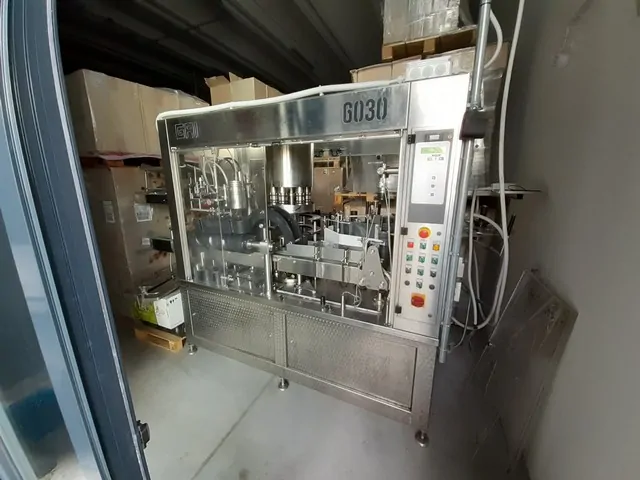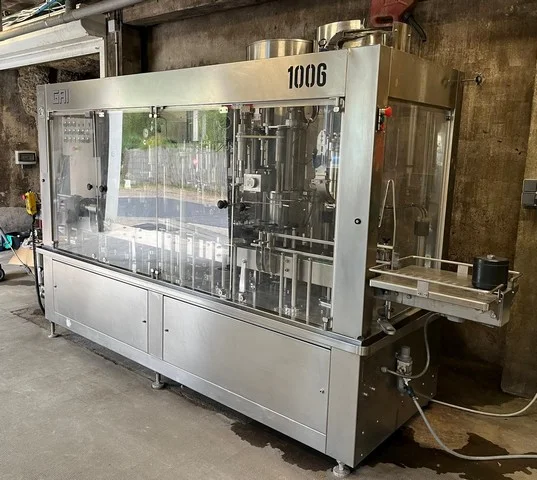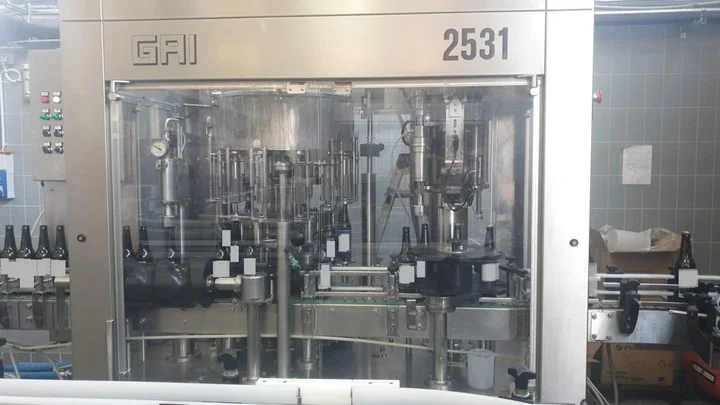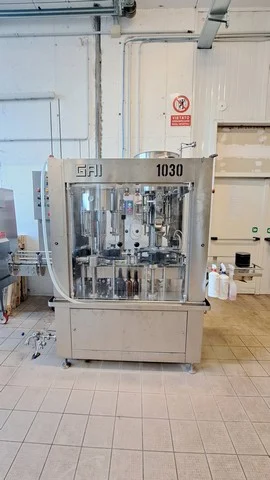
Gai filling monoblock
Modello 1030 – S01
- Produttore
- GAI
- Modello
- 1030 – S01
- Anno
- 2015
- Velocità
- 1200 BPH
- Direzione
- Clockwise
- Contenitore
- Glass
- Condizione
- As Is
- Ubicazione
- Europe
- Codice
- QT 770
Rispondiamo in tempo reale con preventivo, foto e dettagli tecnici.
Panoramica
Used GAI 1030 – S01 Filling Monoblocks of 2015 is a dedicated monoblock for glass bottles, designed to operate at a speed of 1,200 bph with 33 cl bottle formats. This specific unit, available on BottlingScout.com and part of our offerings of used GAI filling monoblocks, features a clockwise rotation, making it suitable for integration into existing lines configured for this flow. At its core, the machine incorporates a 6 mechanical valve filler, utilizing a light vacuum filling system known for its gentle handling of products and precise fills. After the filling stage, it moves into a single-head crown capper, engineered to apply crown caps of two common sizes: 26 mm and 29 mm. The efficiency of the capping process is enhanced by its 'pick on the fly' distribution system, ensuring continuous operation without pausing for cap placement. For product preservation and quality, it includes an inert gas injection system positioned just before capping, which displaces oxygen from the bottle headspace, a critical feature for beverages susceptible to oxidation. The entire unit is equipped with safety protection, a standard requirement for operational integrity and personnel safety. This particular machine, a second-hand filling monoblock for sale, is located in Europe and offered in 'As Is' condition. Its specific configuration as a GAI 1030 – S01 1200 BPH monoblock, focusing on glass bottles and crown caps, makes it a targeted solution for certain beverage productions looking for reliable, proven technology without the lead times of new equipment.
Contesto tecnico
When inspecting this 2015 GAI 1030 – S01 monoblock, an experienced eye goes beyond the listed specs. Focus on the 6 mechanical valves in the filler; check for any signs of pitting, wear on valve skirts, or corrosion, especially if used with acidic products. With a light vacuum filling system, inspect the vacuum lines and seals for integrity, as leaks here will compromise fill levels and speed. Pay close attention to the single-head crown capper. The 'pick on the fly' system relies on precise timing and clear cap paths; verify smooth cap transfer and look for wear on the cap sorting bowl and chute for both 26 mm and 29 mm cap formats. Manual cycling of the capper head mechanism is crucial to feel for any binding or excessive play in the cam followers. For the inert gas injection system, confirm the integrity of the gas nozzles and their positioning before capping, as damaged nozzles can lead to inefficient gas consumption or poor headspace displacement. Examine the general condition of the gearbox and main drive, listening for abnormal noises during a dry run if possible. Regarding the mentioned 'safety protection,' verify all guards are present, free from damage, and that interlocks function correctly, as sometimes these are bypassed over time. For a 2015 vintage unit, scrutinize electrical wiring for brittle insulation or signs of overheating, and check the HMI screen for dead pixels or unresponsiveness. Crucially, inquire about the availability of the machine’s operational manual, any historical maintenance logs, and a list of common wear parts they usually kept in stock; these are gold for future operational planning.
Integrazione di linea
Integrating this GAI 1030 – S01 monoblock, running at 1,200 bph with a clockwise rotation, demands careful planning for upstream and downstream equipment. Given its 1,200 bph speed, you'll need an unscrambler or depalletizer capable of consistently feeding glass bottles at or slightly above this rate. For accumulation, a single-file accumulator or a small pressureless combiner before the monoblock is prudent to buffer against minor upstream interruptions, preventing starvation of the filler. Due to the clockwise rotation, expect the bottles to enter from the left and exit to the right relative to the operator's position, dictating the layout of your conveyors and subsequent equipment. After filling and capping, a suitable labeling machine is the next logical step, followed by packaging equipment like a case packer or shrink wrapper. Throughput balancing means ensuring all connected machinery, from bottle feed to end-of-line packaging, not only meets but can sustain the 1,200 bph rate. For format changeovers, particularly between the 26 mm and 29 mm cap sizes or different 33 cl bottle formats, a buyer should immediately ask for all change parts associated with these specified cap sizes and any alternative 33 cl bottle dimensions if they exist. Specifically, request any starwheels, guides, and cap chute components for both 26 mm and 29 mm caps, as these are critical for smooth transitions and accurate capping.
Descrizione
Model: 1030 – S01
Year: 2015
Speed: 1,200 bph with 33 cl bottle format
Clockwise rotation
Processable container type: glass bottles
6 mechanical valves filler
Filling system: light vacuum
Single-head crown capper
Cap size: 26 and 29 mm
Distribution system: pick on the fly
Inert gas injection system before capping
Safety protection