Axtra filling monoblock 5.1
Modello Miniline L-SA1 / L-G5 / L-IV5 / L-CW1 bottling machine
- Produttore
- Axtra
- Modello
- Miniline L-SA1 / L-G5 / L-IV5 / L-CW1 bottling machine
- Anno
- 2016
- Velocità
- 600 BPH
- Direzione
- Linear
- Contenitore
- Glass
- Condizione
- As Is
- Ubicazione
- Europe
- Codice
- QT 772
Rispondiamo in tempo reale con preventivo, foto e dettagli tecnici.
Panoramica
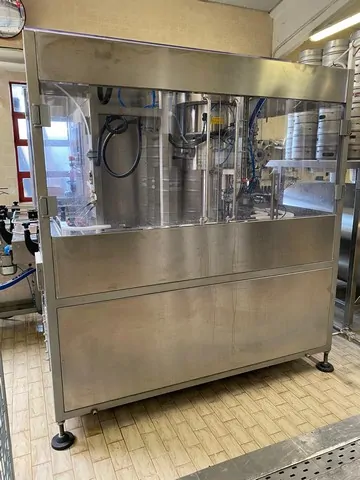
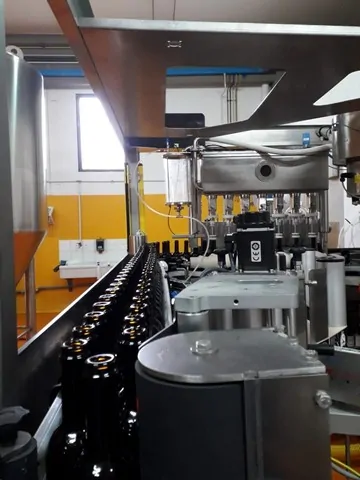
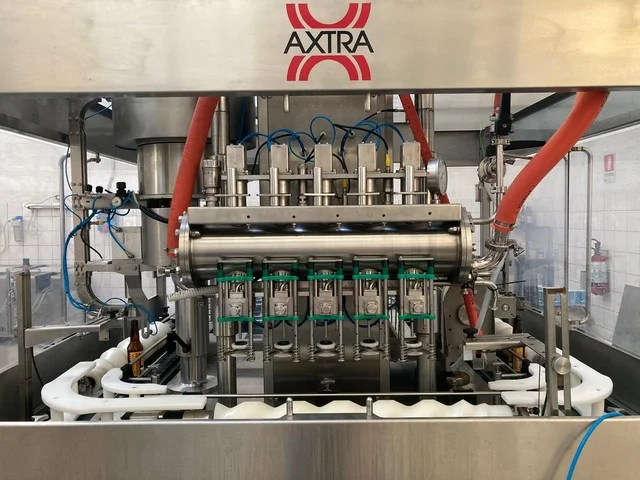
Used Axtra Miniline L-SA1 / L-G5 / L-IV5 / L-CW1 bottling machine Filling Monoblocks of 2016 from Axtra, available as is and located in Europe, is designed for handling glass bottles at a speed of 600 BPH. This linear monoblock operates with a right-to-left layout and features an isobaric filler equipped with 5 electropneumatic valves. These valves are built for comprehensive functionality, offering pre-evacuation, gas injection, and degassing capabilities, making it suitable for carbonated products. Following the filling station, the machine integrates a single-head crown capper, engineered to accommodate both 26 mm and 29 mm crown caps, and is specifically prepared for the application of shrink capsules. The system utilizes a 'fly-through' transfer mechanism, meaning containers are picked up on the fly as they move through the line. For labeling, it incorporates a single-station self-adhesive labeller, dedicated to wrap-around labels, featuring fixed groups for consistent application. An inkjet marker is also included for applying date and batch codes. The entire unit is built with safety protections, ensuring operator safety during operation. This used Axtra filling monoblocks, specifically the Axtra Miniline L-SA1 / L-G5 / L-IV5 / L-CW1 bottling machine 600 BPH, represents a complete solution for small to medium-scale bottling operations focusing on glass containers, particularly those requiring isobaric filling and crown capping. For those searching for second-hand filling monoblocks for sale, this unit offers integrated filling, capping, and labeling capabilities within a compact, linear footprint from a 2016 vintage.
Contesto tecnico
When inspecting this 2016 Axtra Miniline L-SA1 / L-G5 / L-IV5 / L-CW1 bottling machine, pay close attention to critical wear points. For the isobaric filler with 5 electropneumatic valves, examine the condition of the valve seals and diaphragms, as these are critical for pre-evacuation, gas injection, and degassing performance. Look for any signs of corrosion or product buildup on the filling nozzles. On the single-head crown capper, meticulously check the capping head's condition, especially the springs, cams, and bell, given its ability to handle both 26 mm and 29 mm caps. Verify the mechanism that prepares it for shrink capsules is intact and not seized. The 'fly-through' transfer system often experiences wear on gripper pads or guides; ensure these are in good condition to prevent glass bottle damage. For the single-station self-adhesive labeller with fixed groups, inspect the glue application rollers or dispensing head for wear, blockages, or dried adhesive residue. Check the labeling head itself for bearing play. Verify the functional output of the inkjet date and batch code marker; often, the printhead can be neglected, leading to blockages. Confirm the completeness and integrity of all safety protections mentioned, ensuring no interlocks have been bypassed. A 2016 vintage machine might show signs of minor leaks around seals or valves; look for these. Ask for any spare parts, particularly for the electropneumatic valves, capper chucks, and labeller dispense components. Verifying the genuine functionality of features like 'pre-evacuation, gas injection, degassing' for each of the 5 valves is crucial, as is testing the capper with both specified cap sizes.
Integrazione di linea
For integrating this 2016 Axtra Miniline L-SA1 / L-G5 / L-IV5 / L-CW1 bottling machine operating at 600 bph with a linear, right-to-left layout, you'll need to consider the surrounding equipment to maintain consistent flow. Upstream, a suitable bottle unscrambler or depalletizer is essential to feed glass bottles into the system. Given the 600 BPH speed, a simple infeed conveyor should suffice, but ensure it's sized correctly for the glass bottle dimensions. Buffering before the infeed to the monoblock is crucial to prevent starvation and ensure the filler runs consistently; a small accumulation table or a properly designed conveyor section can manage this. Downstream, after the single-station self-adhesive labeller and inkjet marker, you'll need a way to outfeed and pack the finished bottles. A case packer or shrink wrapper would be the logical next step. For throughput balancing, ensure the preceding and succeeding machines can handle or exceed 600 BPH to prevent bottlenecks. When requesting format changeover parts, specifically inquire about the starwheels, guides, and chucks for both the 26 mm and 29 mm crown cap sizes, as the capper is prepared for both. Also, confirm the availability of change parts for the self-adhesive labeller for different label sizes. The linear layout simplifies conveyor integration, but ensure the infeed and outfeed conveyors are aligned precisely with the right-to-left flow of the machine to prevent jamming, especially with glass bottles.
Descrizione
Model: Miniline L-SA1 / L-G5 / L-IV5 / L-CW1 bottling machine
Year: 2016
Speed: 600 bph
Layout: Linear, right-to-left
Container type: Glass bottles
5 clamps rinser fixed nozzle one treatment
Isobaric filler with 5 electropneumatic valves
Valve functions: pre-evacuation, gas injection, degassing
Single-head crown capper
Cap sizes: 26 mm and 29 mm – prepared for shrink capsules
Single-station self-adhesive labeller for wrap-around labels
Inkjet date and batch code marker
Safety protection