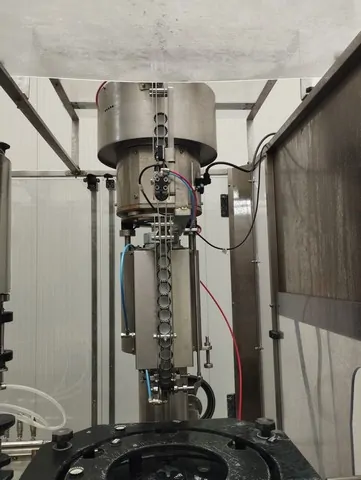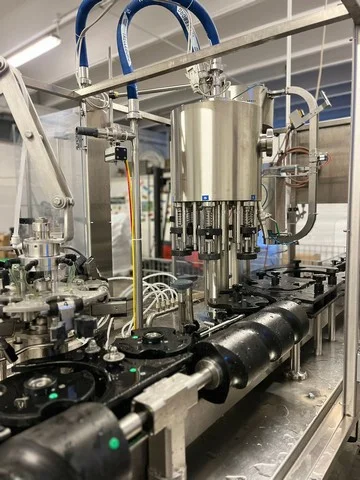
Cem filling triblock
Modello 661
- Produttore
- CEM
- Modello
- 661
- Anno
- 2012
- Velocità
- 1000 BPH
- Direzione
- Clockwise
- Condizione
- As Is
- Ubicazione
- Europe
- Codice
- QT 774
Rispondiamo in tempo reale con preventivo, foto e dettagli tecnici.
Panoramica
Used CEM 661 Filling Monoblocks of 2012, a reliable option for packaging operations, is now available. This specific second-hand filling monoblock for sale, designed by CEM, offers a production speed of 1,000 bph (bottles per hour) and operates with a clockwise direction of rotation, making it suitable for integration into various existing lines. The machine’s rinser section features 6 fixed-nozzle clamps, ensuring thorough pre-filling preparation, with a dedicated 1-water treatment for comprehensive rinsing. Following the rinsing stage, the gravity filler is equipped with 6 mechanical valves, engineered for precise and consistent filling. For capping, this cem 661 1000 BPH unit includes a single-head capper capable of handling both 26 mm and 29 mm crown caps, offering versatility for different product lines. It is designed to support common bottle sizes, specifically 33 cl and 75 cl, catering to standard beverage requirements. For operational security, the unit comes with safety protections. This used cem filling monoblocks unit is currently located in Europe and is offered in 'As Is' condition, representing a practical acquisition for producers looking to optimize their packaging line with proven equipment. Interested buyers can find this cem 661 1000 BPH unit, ready for inspection, further solidifying its appeal as a robust used filling monoblock.
Contesto tecnico
When inspecting this CEM 661 Filling Monoblocks unit from 2012, focus your attention on critical wear points that naturally develop over a decade of operation. For the rinser section, specifically check the 6 fixed-nozzle clamps for signs of mineral buildup, corrosion, or wear on the clamping mechanisms; ensure the nozzles are clear and not blocked, especially with only 1 water treatment noted in the description, which might mean harder water use. The gravity filler's 6 mechanical valves are prime candidates for inspection: look for scoring, pitting, or worn O-rings in the valve stems and fill tubes, as these directly impact filling accuracy and drip control. Operate the capper head to observe the crown cap chucks for both 26 mm and 29 mm; uneven wear or damage to the jaws can lead to poorly applied caps. Check for play in the capper head's vertical movement mechanism. Given its age, scrutinize all gears, bearings, and chains, particularly those within the main drive train and those moving the rinser and filler carousels, for excessive wear or corrosion. Pay close attention to the condition of the main frame and contact surfaces for any signs of pitting or rust, indicating inadequate previous cleaning or maintenance. Verify the functionality and integrity of the stated safety protections – often these can be bypassed or damaged over time, diminishing their effectiveness. Request a clear inventory of any spare parts, especially for the rinser clamps, filler valves, and capper chucks; these are crucial for continued operation and can be costly to source individually.
Integrazione di linea
Integrating this CEM 661 into your production line requires careful consideration to maximize its stated 1,000 BPH capacity with a clockwise rotation. Given its speed, accumulation at both the infeed and outfeed is crucial. For the infeed, a moderate accumulation table or a simple conveyor accumulation of 2-3 meters would prevent starvation due to upstream stoppages, ensuring a steady flow to the rinser's 6 fixed-nozzle clamps. The clockwise rotation dictates that bottles will enter from the right (looking from the operator's side) and exit to the left, which influences conveyor routing. A buffer of similar length post-capper, before labelling or packing, is essential to absorb minor downstream interruptions. When considering conveyor material, low-friction acetal or stainless steel chains are advisable for gentle bottle handling, particularly for the supported 33 cl and 75 cl PET or glass bottles. For format changeovers, particularly between the 33 cl and 75 cl bottles, you'll primarily need sets of infeed scrolls, starwheels for the rinser, filler, and capper, and potentially discharge starwheels. Crucially, spare crown cap chucks for both 26 mm and 29 mm caps should be requested; these components frequently wear or become damaged. Ensure your upstream depalletizer or decaser can deliver bottles at a consistent rate to avoid bottlenecks at the monoblock's entry point, and that your downstream labelling and packing equipment can comfortably handle the 1,000 BPH output to prevent excessive line pressure.
Descrizione
Model: 661
Year: 2012
Speed: 1,000 bph (bottles per hour)
Direction of rotation: clockwise
Rinser: 6 fixed-nozzle clamps
Treatment: 1 water treatment
Gravity filler: 6 mechanical valves
Single-head capper for crown caps 26 mm and 29 mm
Supported bottle sizes: 33 cl and 75 cl
Safety protection