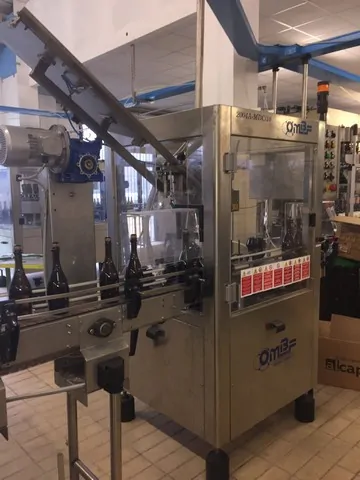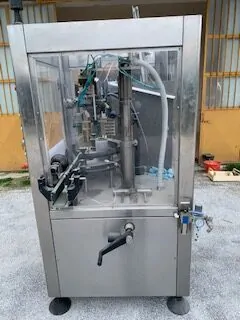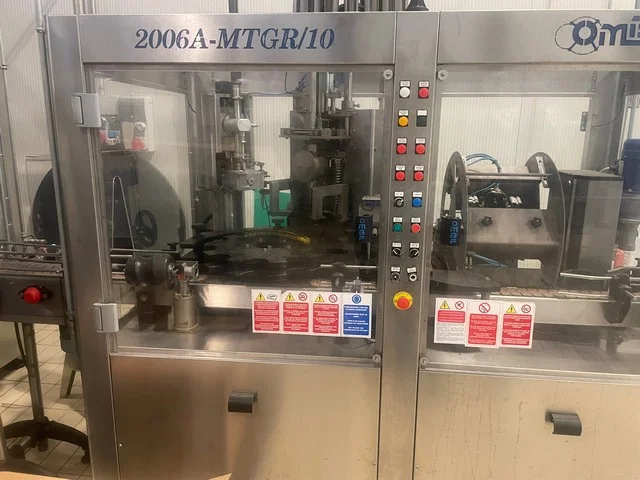
OMBF tappatore
Modello 2006 - MTGR/10
- Produttore
- OMBF
- Modello
- 2006 - MTGR/10
- Anno
- 2010
- Velocità
- 800 BPH
- Direzione
- Clockwise
- Condizione
- As Is
- Ubicazione
- Europe
- Codice
- X 468
Rispondiamo in tempo reale con preventivo, foto e dettagli tecnici.
Panoramica
Used OMBF 2006 - MTGR/10 Cappers of 2010. This particular second-hand OMBF machine, known as the 2006 - MTGR/10 model, is a single-head corker engineered for mushroom-shaped corks, handling 800 bph in a clockwise direction. Complementing its corking function, it’s also equipped as a single-head wire hooder, designed specifically for applying 4-wire cages. The machine integrates a long-autonomy distributor, ensuring a consistent supply of closures, and features a 3-compartment agitator, likely for organizing and feeding the corks or wire hoods effectively. Safety is addressed through its incorporated safety protection mechanisms. This specific unit, identified as a used OMBF cappers, was manufactured in 2010 and operates at a precise speed of 800 bph. Its operational direction is clockwise, a critical detail for line integration. This OMBF 2006 - MTGR/10 is currently located in Europe and is offered in 'As Is' condition, making it a direct acquisition for businesses seeking 'second-hand cappers for sale' without additional reconditioning from the seller. The combination of its corking and wire hooding capabilities, coupled with its reliable speed of 800 bph, positions this OMBF 2006 - MTGR/10 as a practical solution for specific bottling needs.
Contesto tecnico
When inspecting this specific OMBF 2006 - MTGR/10 capper, the primary focus should be on the components responsible for the single-head corking and wire hooding functions given its 2010 vintage. For the single-head corker, meticulously check the condition of the cork compression jaws or dies for wear, pitting, or any signs of misalignment which would compromise cork integrity. The cork feeding mechanism from the long-autonomy distributor should be observed for smooth operation, ensuring no jamming or damage to corks. On the single-head wire hooder with 4-wire cage capability, scrutinize the wire-forming and crimping tools. Worn or misaligned tools can lead to incomplete or damaged wire hoods. Pay close attention to the general mechanical play in the main rotating head and the condition of the cam followers, as these directly impact the precision of both operations at 800 bph. The 3-compartment agitator needs verification that it effectively sorts and presents the closures without causing damage. Test the 'safety protection' system; confirm all interlocks and guard presence. For a machine manufactured in 2010, inspect the electrical cabinet for corrosion or any signs of outdated controls that might be difficult to source. Crucially, verify that the 'long-autonomy distributor' and '3-compartment agitator' are fully functional and not just present, as these are value-adds to streamline feeding. Request documentation on routine maintenance and any spare parts inventory, especially for the specialized corking and wire hooding components. Red flags would include excessive vibration during a dry run, inconsistent closure application, or visible damage to the head assembly indicating past impacts or neglect.
Integrazione di linea
Integrating this OMBF 2006 - MTGR/10 capper into a bottling line requires careful consideration of its 800 BPH clockwise operation. Ahead of this single-head corker and wire hooder, you'll need a filler sized to match or exceed 800 BPH to prevent starvation. For example, a 6-10 valve rotary filler would typically be a good fit, ensuring a steady stream of filled bottles. Given the clockwise rotation, the infeed conveyor should approach from the machine's 7 or 8 o'clock position (when viewed from above) and the discharge conveyor should exit around the 1 or 2 o'clock position, flowing smoothly into the next operation. Accumulation before the capper is crucial; a small accumulation table or a 30-second accumulation conveyor section immediately preceding the OMBF would buffer any minor upstream hiccups and keep the capper fed. After the capper, especially given the handling of mushroom corks and wire hoods, a short, gentle section of conveyor is advisable before any labeling or packing, allowing the closures to fully seat and stabilize. For format changeover parts, a buyer should immediately inquire about starwheels and guides specific to their bottle diameters and heights. It's also critical to ensure the machine comes with change parts for the specific mushroom cork and 4-wire cage types they intend to use. Throughput balancing means ensuring the upstream filler isn't overfeeding, creating back pressure, nor underfeeding, causing intermittent stops. Given the OMBF's robust single-head design, it should be a steady performer at 800 BPH, making it a reliable anchor point in the capping section.
Descrizione
Model: 2006 - MTGR/10
Year: 2010
Speed: 800 bph
Direction: clockwise
Single-head corker for mushroom-shaped corks
Single-head wire hooder with 4-wire cage
Long-autonomy distributor
3-compartment agitator
Safety protection