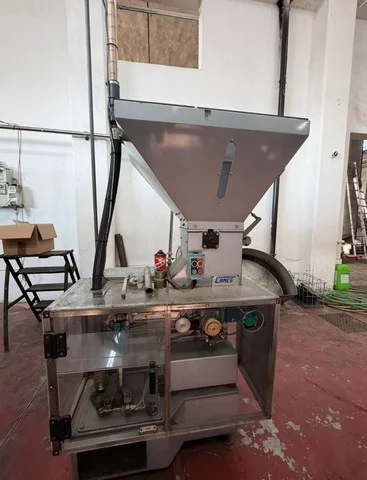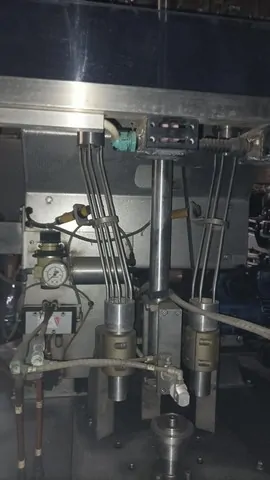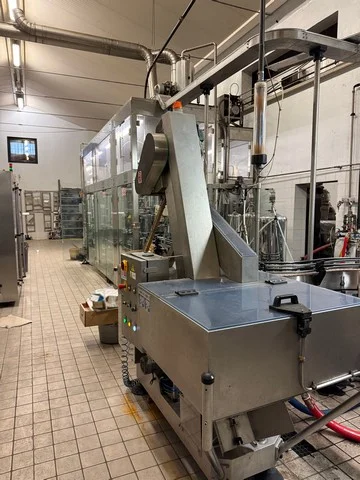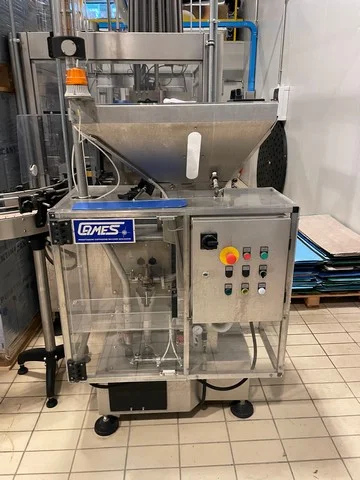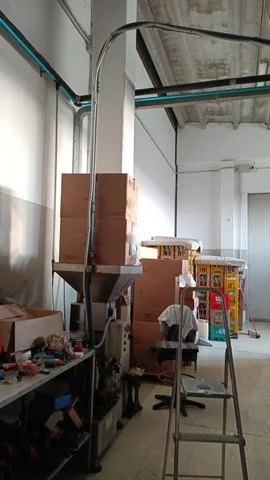
Cames caps orientators
Modello caps orientator
- Produttore
- Cames
- Modello
- caps orientator
- Anno
- 1990
- Velocità
- 3000 BPH
- Condizione
- As Is
- Ubicazione
- Europe
- Codice
- I 82
Rispondiamo in tempo reale con preventivo, foto e dettagli tecnici.
Panoramica
Used Cames caps orientator Caps Orientators of 1990 helps prepare closures for bottling lines, specifically handling straight corks and mushroom corks. This particular Cames unit operates at a practical speed of 3000 pph, which stands for pieces per hour, aligning with its role as a caps orientator. I've serviced plenty of these over the years, and a 3000 BPH orientator like this Cames model from 1990 is a reliable workhorse for its intended application. It includes essential safety protection, ensuring operator well-being during operation. Given its age, this used Cames caps orientators is offered in 'As Is' condition and is currently located in Europe, making it a viable option for those looking for second-hand caps orientators for sale without needing to ship across continents. The machine's design is focused on efficiently orienting, specifically straight cork and mushroom cork, indicating its suitability for wine or sparkling wine lines where these closure types are prevalent. The listed speed of 3000 pph confirms its capacity for moderate-volume production requirements. The integrated safety protection is a crucial detail for any used bottling equipment, especially on units from 1990, as it indicates a basic level of compliance and care in its previous operation. Anyone looking for a dedicated unit to handle these specific cork types at a steady rate will find this unit worth considering.
Contesto tecnico
When inspecting this 1990 Cames caps orientator, particularly one handling straight cork and mushroom cork at 3000 pph, several points warrant close attention. First, confirm the 'Safety protection' mentioned in the description. Look for physical guards, interlocks on access doors, and functional emergency stops. A unit from 1990 might have older safety standards, so verify if these are still robust or if they've been bypassed. Pay close attention to wear on the sorting mechanism itself – the rotating discs, vibrating channels, or escapement mechanisms where the corks are manipulated. These components are prone to wear over decades of operation, especially with abrasive cork materials. Look for scoring, indentations, or excessive play. Check the motor and gearbox for any unusual noises or leaks during a brief test run, if possible. The electrical cabinet should be inspected for original components versus any ad-hoc repairs; look for cleanly wired additions if any. For a unit from 1990, ask for any original manuals, electrical diagrams, or a list of spare parts. Common wear parts for orientators include feed belts, sorting discs, and pneumatic cylinders for escapement. While the straight cork and mushroom cork capability is stated, verify the adjustability or the specific change parts required for each type. Red flags would include worn sorting surfaces that show signs of constant jamming, evidence of poorly executed electrical modifications, or any signs that the safety features have been tampered with or are non-functional.
Integrazione di linea
Integrating this Cames caps orientator, rated at 3000 bph, requires careful planning for both upstream and downstream equipment to maintain a smooth material flow. Upstream, you'll want a bulk cork hopper or a feeder system sized to supply at least 3000 corks per hour, ensuring a continuous supply without starving the orientator. Given its 1990 vintage, the interface is likely mechanical or basic electrical, so a straightforward conveyor delivering caps to its infeed is appropriate. Downstream, once the straight corks or mushroom corks are oriented, they need to be transferred to the capper's infeed. A narrow lane cap conveyor, specifically designed to maintain the orientation, is essential. This conveyor should have a slight incline to assist with gravity feed or a gentle air-assist to prevent jams. For balancing throughput, at 3000 bph, a small accumulation table or a buffer section on the cap conveyor right before the capper is advisable. This compensates for minor stoppages in either the orientator or the capper, preventing line interruptions. When considering format changeover for straight cork versus mushroom cork, you'll want to inquire about any specialized tooling or adjustment mechanisms. While often these units handle different cap types with simple mechanical adjustments, having spare guide rails, discharge chutes, or starwheel inserts for each specific cork dimension would be incredibly beneficial to ensure quick and efficient changeovers, minimizing downtime. With a machine of this age operating at 3000 bph, consistency is key, so avoiding abrupt changes in speed or direction around the orientator is paramount for optimal performance.
Descrizione
Speed: 3000 pph
Type: straight cork and mashroom cork
Safety protection